Define Your AI KPI to Set Your ROI
Date & Time: Thursday, March 26
Location: 1449 S. Michigan Ave, Chicago
Hosted by: Entrenuity
Event Overview:
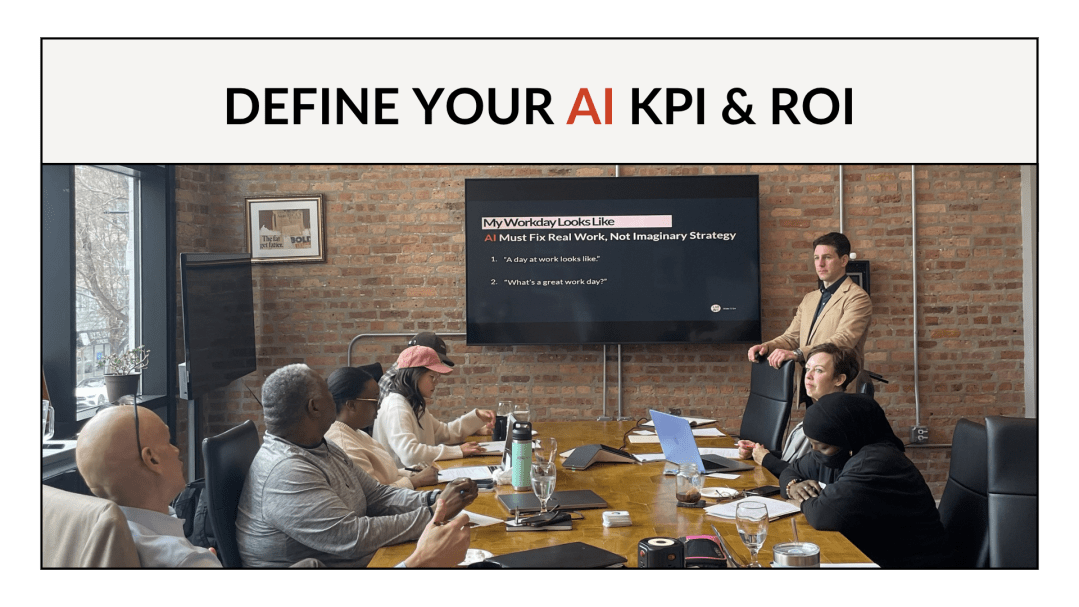
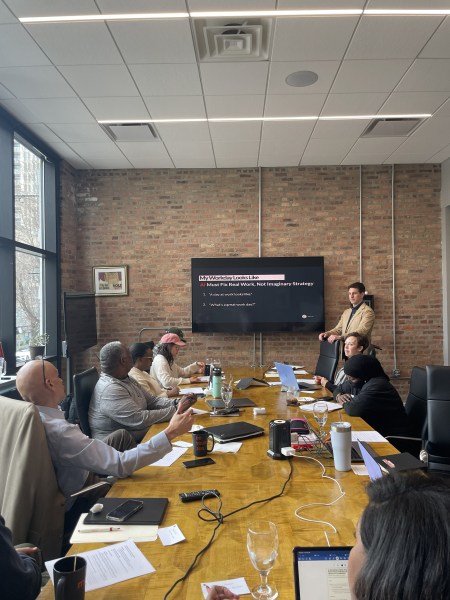
AI tools are more accessible than ever, but most organizations remain stuck in experimentation without measurable impact. In this session of the Mox.E Speaker Series, I worked with participants to move their current AI use out of the experimental phase and into practical, measurable workflows.
The session focused on a simple principle: AI becomes valuable when it’s tied to a single clearly defined KPI and translated into business outcomes for it’s ROI. Rather than starting with how participants are using their AI tools, they identified their actual daily work, mapping out their workflows so they could see where their friction points exist, and using that to define a single use case that tied an AI tool to a measurable result.
Participants Left With:
- A completed KPI to ROI worksheet tied to their own real-world use case.
- A clear understanding of how AI can address a specific daily pain point.
- A structured workflow moving from Process → Pain → KPI → AI → ROI.
- A repeatable method for measuring AI performance regardless of the tool used.
- A repeatable feedback cycle for confidently measuring AI regardless of the AI tool.
Workshop Takeaway
A consistent theme throughout the session was that AI must be treated as a tool, not a magic wand, or a shortcut. When organizations start with tools instead of problems, AI remains experimentation, initiatives stall, and frustration builds.
I focused the workshop on showing the participants that by defining one use case, one KPI, and one measurable outcome creates clarity. From there, I then walked them through why AI becomes a step in their business processes, not a magic wand. That allowed them to move from asking “What can AI do?” to answering “Is this AI tool improving my work in a practical and measurable way?”
The workshop demonstrated my belief that AI is a practical tool made for real work. AI adoption is not about access to tools, but about discipline in how those tools are applied, measured, and improved over time.
Stay Connected
If you’d like a copy of the worksheet, a recap of the session, or want to discuss how I’m applying this approach to AI adoption and governance, then let’s connect:
 LOGANMONDAYAI